Last updated: August 12, 2026
- Afterward, judge the session by the next 24 hours, not just the minute you finish.
- On a good day, that may mean 10 minutes.
- – Mild discomfort during exercise can be normal; pain that worsens for 24 hours is a sign to reduce load.
- – A good starter session is often 15 to 30 minutes total , with support from a chair, wall, or counter.
A stiff hip can turn a chair stand into a chore. Hip arthritis exercises can help you move more easily and may reduce day-to-day stiffness, but the right plan depends on what kind of pain you have, how irritated the joint is, and what else is going on in your body. For hip arthritis exercises mobility pain relief, the goal is usually better function — not to “fix” the joint overnight. New pain, severe pain, worsening pain, or pain paired with fever, injury, leg weakness, numbness, or trouble bearing weight? Speak with a qualified clinician first. For ongoing hip arthritis, a physical therapist, sports medicine clinician, or orthopaedic specialist can help you match exercises to your situation safely. The American College of Rheumatology and Arthritis Foundation both place exercise at the center of osteoarthritis care, alongside other conservative measures.
Quick Answer: For most people with hip arthritis, a practical starting point is 5 to 10 minutes of gentle mobility, 1 to 2 strengthening moves, and 10 to 20 minutes of low-impact activity, done 3 to 5 days a week if symptoms stay settled afterward.
Key Facts
– Hip arthritis exercises are usually about mobility, strength, and pacing, not pain elimination.
– Mild discomfort during exercise can be normal; pain that worsens for 24 hours is a sign to reduce load.
– A good starter session is often 15 to 30 minutes total, with support from a chair, wall, or counter.
– Low-impact options such as walking, cycling, and water exercise are commonly better tolerated than jumping or running.
– Sudden pain, severe pain, or pain paired with weakness, numbness, fever, or trouble weight-bearing? Get evaluated first.
– Exercise is one part of hip arthritis exercises mobility pain relief; it works best when matched to the symptom pattern.
What Hip Arthritis Exercises Can Help With — and What They Cannot
Stiff after sitting? Sore when you stand? Losing walking distance? Movement is usually part of the answer. Studies and professional guidelines generally support movement-based care for hip osteoarthritis, especially exercises that improve strength, mobility, and confidence with daily activity. I would not call exercise a cure, and honestly, it is wise to consult a professional if symptoms are sharp, unusual, or worsening. The Arthritis Foundation and the American College of Rheumatology both describe exercise as a core part of osteoarthritis care:
– American College of Rheumatology / Arthritis Foundation guideline: https://acrjournals.onlinelibrary.wiley.com/doi/10.1002/art.41142
– Arthritis Foundation exercise guidance: https://www.arthritis.org/health-wellness/healthy-living/physical-activity
A sharp flare on every stretch attempt means “more stretch” is not the answer. Not even close. Gentler motion, shorter sessions, or professional guidance may fit better. Generic advice sometimes gets this wrong by telling people to push through pain as if more effort always means more progress, but arthritic hips often need a slower pace. Sometimes the body wants finesse, not force.
What usually helps most is a mix of:
– Gentle hip motion to reduce stiffness
– Strength work for glutes, thighs, and trunk
– Low-impact aerobic movement like walking, cycling, or water exercise
– Pacing so you do not spike symptoms and then spend the next day paying for it
Quick check: Stiffness, achiness, and reduced mobility? Exercise is likely relevant. Sharp, unexplained, or rapidly worsening pain? Get evaluated first.
The 3 Conditions That Change Everything

Read this part first, if you only read one section. The “right” hip arthritis exercise plan changes when your pain behaves in one of three ways: calm and stiff, irritated and reactive, or mixed with other medical problems.
A stiff-but-settling hip usually responds to regular mobility and strengthening. A joint that gets more painful during or after movement and stays angry for hours needs smaller ranges, fewer reps, and more recovery between sessions. Back pain, knee pain, balance problems, or trouble getting on the floor change the choice again because the goal is not just the hip joint — it is the whole movement pattern. That is why hip arthritis exercises mobility pain relief should be adjusted to the person, not just the diagnosis. Cookie-cutter plans fall apart fast.
Here is the simplest way I would sort the options:
| Situation | Best Path | Why Other Options Fail |
|---|---|---|
| Morning stiffness, mild-to-moderate ache | Gentle range-of-motion + light strengthening | All-stretch or all-strength plans miss one half of the problem |
| Pain flares after exercise and lingers | Shorter sessions, smaller ranges, slower progression | Pushing harder can keep the joint irritated |
| Hip pain plus low back or knee pain | Whole-chain exercises, often with a clinician’s help | Isolating the hip alone may not fix the load pattern |
| Trouble with balance or falls | Supported standing work and supervised progression | Floor-based or unstable exercises may be unsafe |
| Pain with weight bearing that is severe or sudden | Medical evaluation before exercise progression | This may not be simple arthritis |
For hip arthritis, I usually think in this order: calm the joint, restore motion, then rebuild capacity. Flip that sequence, and people often quit because they feel worse instead of better.
A good rule of thumb is that exercises should feel workable, not heroic. Mild discomfort during movement can be normal, but pain that makes you brace, limp more, or feel worse later is a sign to scale back. That is not failure; it is feedback.
Quick check: Stiffness, flare, or a bigger movement issue? The exercise plan should match that pattern — not just your diagnosis label.
Hip Arthritis Exercises That Usually Make the Most Sense
Looking for a place to begin? I’d usually break it into four buckets: mobility, strengthening, balance, and low-impact cardio. You do not need every exercise at once, and you do not need long sessions to begin. In fact, trying to do too much is one of the fastest ways to make a sore hip rebellious. It digs in its heels.
1) Gentle mobility work
When the hip feels stuck, start with motion that stays small and controlled. Think of this as greasing the hinge, not forcing it open.
Good options often include:
– Heel slides while lying down
– Knee-to-chest motion only as far as comfortable
– Seated hip rotation with the foot planted
– Standing hip swings while holding a counter
– Easy marching in place
If an exercise creates a sharp pinch in the front of the hip, then reduce the range or stop that version. People with arthritis sometimes need less range, not more.
2) Strength work
Want better walking tolerance, stair climbing, and stability? The muscles around the hip matter a lot. The gluteal muscles, thigh muscles, and trunk often do extra work when the hip joint is cranky.
Common choices include:
– Sit-to-stand from a firm chair
– Mini squats to a chair
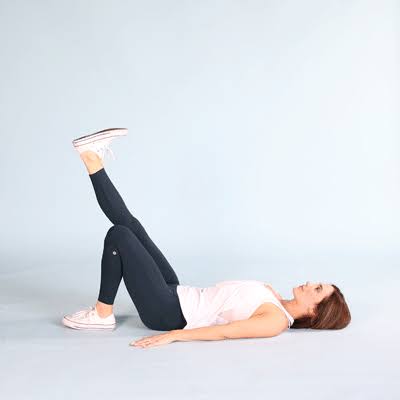
– Bridges
– Side-lying hip abduction if it does not aggravate the hip
– Standing hip abduction with a band
– Step-ups on a low step
If body weight exercises are too hard, then use support, reduce depth, or start with one movement at a time. If they are too easy and never challenge you, they probably will not change much.
3) Balance work
Hip arthritis can make people cautious. Balance exercises can help you move with less fear. That does not mean standing on one leg with no support right away. It may mean:
– Tandem stance near a counter
– Single-leg balance with fingers on support
– Weight shifts side to side
– Slow direction changes while walking
4) Low-impact cardio
Walking, stationary cycling, elliptical work, or water exercise can be useful if your hip tolerates them because they keep the joint moving without the same impact as running or jumping. If walking makes the hip steadily worse, cycling or pool work may be a better bet. Simple. Effective.
A basic way to build a routine:
- Pick one mobility exercise, one strengthening exercise, and one cardio option.
- Start with the easiest version you can do without flaring symptoms badly afterward.
- Move slowly and stop before your form breaks down.
- Use support, a chair, or a wall if balance is shaky.
- Track how the hip feels later that day and the next morning.
- Only progress one variable at a time: range, reps, resistance, or duration.
If you want a practical benchmark, your exercise should feel like “I worked, but I can still function,” not “I got flattened.” That distinction matters more than any perfect set count.
Quick check: Need mobility, strength, balance, and gentle cardio? You are in the right section. A sharp pinch or a long flare? Scale that one back.
If Your Hip Hurts More When You Walk, Climb Stairs, or Stand Up

Pain during weight-bearing tasks usually calls for something smarter than aggressive stretching. The better move is often load management with strength and controlled function.
Here is the pattern I see most often: people with arthritic hips stop moving because walking hurts, then the muscles around the hip get weaker, then walking gets harder. That cycle does not mean you should force long walks right away. It means you need a more measured path back.
Try this approach instead:
- Choose a chair height that lets you stand up without collapsing forward.
- Practice sit-to-stand using hands only if needed at first.
- Use a countertop for support during standing hip abduction or weight shifts.
- Keep step-ups low, slow, and controlled, or skip them until easier tasks feel stable.
- Use short walking bouts with rest breaks rather than one long walk that triggers a flare.
- Afterward, judge the session by the next 24 hours, not just the minute you finish.
If stairs are the worst trigger, then step-up exercises may still be useful, but only at a lower height and lower volume than a staircase, and only if the hip settles afterward. If getting out of a car is the problem, then chair transfers and hip rotation drills may be more relevant than lunges.
Real tools that can help here:
– A firm chair with armrests
– A countertop for support
– A resistance band with light tension
– A stationary bike if walking is too irritating
– A cane or walking aid if a professional recommends one for unloading the hip
The trade-off is plain: safer, easier movement brings less dramatic payoff right away. Fine. With a painful hip, consistency beats intensity.
Quick check: Standing up, walking, or stairs the worst? Use supported strength and short movement doses.
If Your Hip Feels Stiff in the Morning or After Sitting
Stiffness more than pain? Then the first job is to get the hip moving without forcing it. Morning is often not the time for deep stretching or heavy resistance. It is the time for easy motion that tells the joint, “You are safe.”
A useful sequence is:
- Warm the area with a shower, heating pad, or just a few minutes of easy walking if that helps you.
- Start with seated or lying mobility: heel slides, gentle knee bends, or soft hip rotations.
- Move to standing weight shifts while holding support.
- Add one strengthening exercise such as sit-to-stand or bridges.
- Finish with a short walk or easy cycling session if the hip tolerates it.
If stiffness eases as you move, that is a good sign. If stiffness turns into increasing pain, pinching, catching, or a limp that gets worse, then the motion may be too aggressive or the problem may not be simple arthritis alone.
People often ask whether they should stretch the hip flexors, hamstrings, or groin. Honestly, sometimes yes — but not blindly. Stretching can help some people feel looser, but it can also irritate a hip that already dislikes end-range positions. I would choose short, gentle holds over long aggressive stretches, and I would avoid forcing a position just because a video says it is “good for arthritis.” If you are already using hip arthritis exercises mobility pain relief as your goal, stretching should support that goal rather than overpower it. One tug too far, and the hip complains.
A very simple morning and after-sitting plan can be enough:
– 5 to 10 minutes of easy motion
– 1 to 2 strengthening drills
– A short walk or cycle
– A pause to see whether the hip settles or escalates
If your stiffness is severe enough that you cannot start moving normally after a reasonable warm-up, that is a reason to ask a qualified professional to look at the joint and the whole leg.
Quick check: Mainly stiff after rest and loosens with gentle movement? Start there. Motion worsens the pain? Use a slower or different plan.
Hip Arthritis Exercises That Can Backfire
Trying to help your hip? A few common mistakes tend to make things worse instead of better.
First, if you keep chasing pain with deep stretching, then you may irritate the joint capsule or the tissues around it. A lot of “hip opener” routines are too ambitious for arthritic hips. They look graceful and feel terrible.
Second, if you jump straight into high-rep exercises without support, then form breaks down and other joints start taking the load. That is how people end up with sore knees, a cranky back, or a hip that hates the next day.
Third, if you only do one type of exercise, you may miss the real issue. Stretching alone does not build strength. Strengthening alone does not always ease stiffness, especially if the hip still moves poorly. Cardio alone may not stabilize the hip for stairs and transfers.
Fourth, if you use pain as the only guide, you may overdo it on a good day and crash on a bad one. A better guide is the 24-hour response:
– If symptoms settle back to baseline, the load was probably reasonable.
– If you are noticeably worse the next day, the dose was probably too much.
– If you can’t tell because you change too many things at once, simplify.
I would also be cautious with any plan that promises a single exercise to “fix” hip arthritis. That is not how this usually works. The more realistic path is boring but effective: small improvements, repeated often, matched to your symptoms. On a good day, that may mean 10 minutes. On a bad day, it may mean 2 or 3. No magic wand.
Quick check: Mostly deep stretching, huge workouts, or “push through it”? That is probably the wrong plan for an arthritic hip.
Edge Cases Where the Normal Advice Breaks Down
If your situation fits one of these, the usual advice needs a different lens.
- If you have sudden swelling, fever, redness, inability to bear weight, or a clear injury, then the issue may not be routine hip arthritis and you should seek medical care.
- If you have numbness, leg weakness, or pain shooting below the knee, then the hip may not be the only problem.
- If you are dealing with advanced arthritis and severe loss of motion, then home exercise may still help, but the ceiling is lower and a clinician may need to guide the plan.
- After a long period of inactivity, the first week should be about re-entry, not performance.
- If you have pain in both hips, the back, or the knees, then exercise selection should consider the whole chain rather than the hip alone.
For these situations, the safest move is not to guess. It is to get assessed, then build a plan you can actually repeat.
Hip arthritis exercises can still be useful in edge cases, but the dose matters more than the label. A session that looks small on paper can be the right size if your body is reactive. A session that looks “normal” can be too much if your hip has already flattened your energy for the day.
Quick check: Red flags, major weakness, or a big mismatch between symptoms and the usual arthritis pattern? Do not self-direct the plan.
When to Ask for Help
If you have been trying hip arthritis exercises for 2 to 4 weeks and the hip is still getting worse, or if you cannot find any movement that feels tolerable, it is time to ask for help. A physical therapist can usually sort out whether you need less range, more support, different loading, or a different diagnosis. An orthopaedic or sports medicine clinician may be useful if pain is severe, structural, or not behaving like ordinary arthritis.
You should also ask sooner if:
– You are waking at night with persistent pain
– You are limping more each week
– You need more and more support just to do daily tasks
– You cannot progress even from chair-level exercises
– You are unsure whether hip arthritis exercises mobility pain relief is the right framework for your symptoms
The best plan is the one you can repeat without making the joint angrier. That is usually less glamorous than people expect, but it is far more useful.
Quick check: Not improving after a few weeks of careful work? Get a clinician to reassess the plan.
What to Do Next
If you want a simple starting point, choose one mobility exercise, one strength exercise, and one low-impact cardio option. Keep the first session short, watch the 24-hour response, and adjust before adding more. If your pain is severe, sudden, or confusing, get evaluated before pushing ahead.
For many people, hip arthritis exercises mobility pain relief comes from a steady routine built around small wins: 5 to 10 minutes here, 5 more minutes there, then a little more strength when the joint is calm enough. That slow build is often what keeps people moving.
Start with what you can do, not with what a perfect plan would look like.